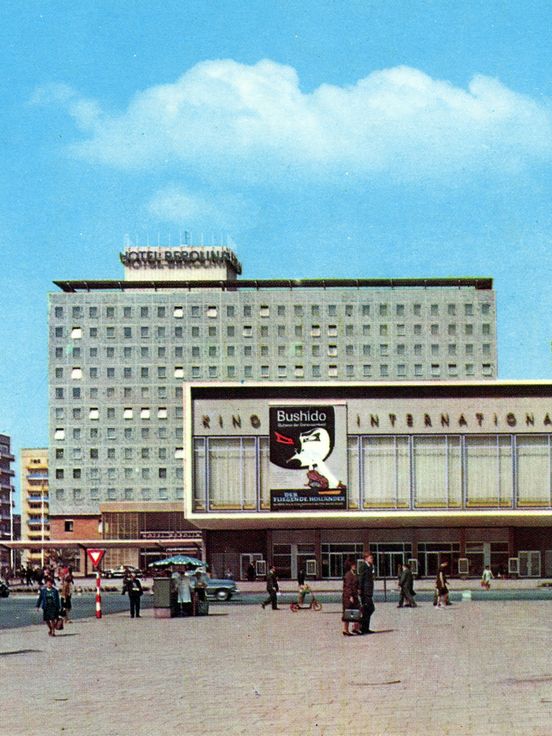
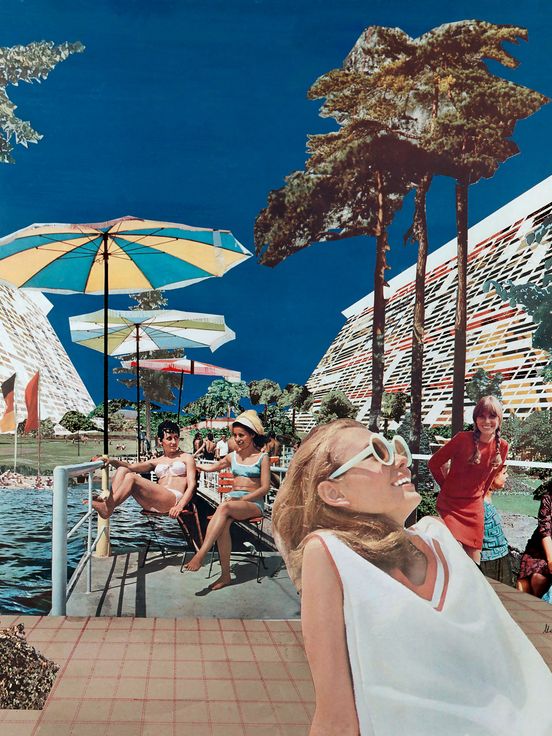
Josef Kaiser (1910–1991) was a key figure in GDR architecture. From 1950 to 1970 he belonged to the collectives behind prestigious state buildings and modern architectures, including Berlin’s Karl-Marx-Allee with the iconic Kino International. His designs expressed new social visions and met with international acclaim. Many are now listed as protected heritage. With the aid of drawings, photographs, films and models this exhibition presents his life and work, shedding light on political and aesthetic frictions. Contemporary artists Veronika Kellndorfer, Karsten Konrad and Tracey Snelling offer fresh perspectives on his legacy as an integral part of Germany’s two state architectural history.
- All the explanatory exhibition texts are available in German and English.
- There is no information in Simple German.
- There is no information in German Sign Language.
- Some outreach events are held in or with German Sign Language.
- There is step-free access to the exhibition.
- Most exhibits and explanatory texts can be viewed and read when seated. The table height is 68 cm, partially allowing for wheelchairs underneath.
- The exhibition includes videos with spoken German and English subtitles. There are headphones for listening.
- Assistive listening is not supported by induction systems or neck loops.
- There are no seatings. Wheelchairs and folding stools can be borrowed free of charge from the cloakroom.
- To protect the works in the exhibition limited use is made of bright illumination. Most of the exhibition texts are designed with strong contrast.
- All the exhibition texts are available as a large-print brochure that you will find at the entrance to the exhibition.
- The exhibition contains no tactile floor guidance and no touch models.
Click here for information about museum accessibility.
Do you have any other questions about accessibility? Christine van Haaren, Head of Education and Outreach will be happy to answer them via e-mail haaren@berlinischegalerie.de or via phone +49 (0)30-789 02-836.
Get your tickets now!
Ticket shopBookable Tours
Short film to the exhibition


